
Companion Planting in the Pacific Northwest — What I’m Planning for My Grants Pass Garden
I’ve known about companion planting in the Pacific Northwest for years. I’ve read about it, thought about it, and watched other gardeners use it with impressive results. But with three brand-new raised beds waiting in my backyard here in Grants Pass, this is the season I’m going to learn about companion planting—planning every bed with intention, putting the right plants next to each other, and letting nature do more of the work for me.
If you’re new to companion planting, the idea is simple and ancient. Certain plants, grown in proximity to each other, help each other thrive. Some deter pests that trouble their neighbors. Some improve the soil in ways that benefit nearby plants. Some attract the beneficial insects that keep a whole garden healthier. And some, planted together, simply produce better harvests than they would alone.
It is one of the most fascinating areas of organic gardening and one of the most practical. In the Pacific Northwest — where slugs are relentless, where beneficial insects are abundant, and where our varied climates reward thoughtful planting — companion planting is especially worth understanding.
Here is what I’m planning, what the research and experienced gardeners say works, and why I think this approach is going to transform my new Grants Pass garden.
The Three Sisters — A Combination as Old as Agriculture
If there is one companion planting combination that every gardener should know, it is the Three Sisters—corn, beans, and squash grown together in the same bed. This combination was developed and refined by Indigenous peoples across North America over thousands of years, and it works as beautifully today as it ever has.
Here is why the three work so well together. Corn grows tall and provides a natural trellis for pole beans to climb. Beans fix nitrogen from the air directly into the soil, feeding the corn and squash with a natural fertilizer that costs nothing. Squash spreads along the ground beneath both, its large leaves shading the soil—retaining moisture, suppressing weeds, and keeping the ground cool during hot summer days. Each plant gives something the others need.
For Pacific Northwest gardeners, the Three Sisters works particularly well in warmer inland areas like the Rogue Valley, Willamette Valley, and eastern Oregon and Washington, where the summers are long and warm enough for corn to thrive. In cooler coastal or Puget Sound gardens, corn can struggle—in those areas, I’d suggest substituting sunflowers for the corn, which perform a similar structural role and love the Pacific Northwest regardless of how cool the summer gets.
In my Grants Pass garden this season, I’m dedicating one of my three raised beds to a Three Sisters planting. Our long hot summers here in Southern Oregon are ideal for all three crops, and I’m genuinely curious to see how the system performs in practice.
Tomatoes and Basil—The Classic Pairing
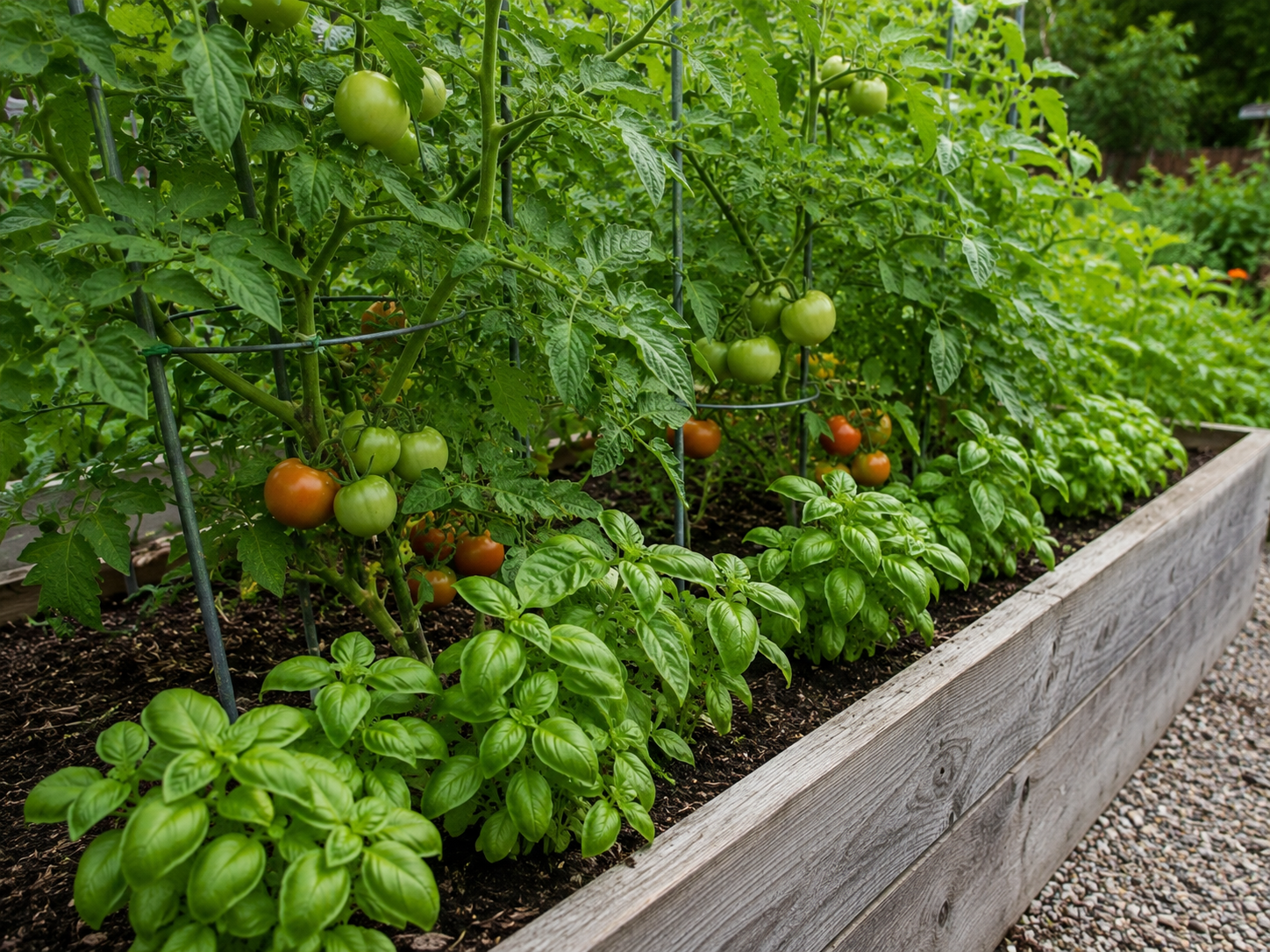
If the Three Sisters are the most ancient companion planting combination, tomatoes and basil might be the most beloved. Gardeners have been planting these two together for generations, and the reasons are compelling on multiple levels.
Basil is believed to repel aphids, whiteflies, tomato hornworm moths, and flies—all of which can cause real problems for tomato plants. It also attracts pollinators, which improves fruit set. And some gardeners swear — and I am inclined to believe them — that basil grown near tomatoes actually improves the flavor of the fruit. I can’t explain the chemistry of that, but I intend to find out firsthand this season.
Beyond the practical benefits, basil and tomatoes simply belong together in the kitchen, which makes the garden logic feel especially right. Growing them side by side means both are ready at the same time, steps from each other, exactly when you need them.
Next to my containers I’ll be planting one Genovese basil plant near the base of each tomato—close enough to provide the pest-deterring benefits but not so close as to compete for root space. I’ll also keep a pot of Thai basil nearby for the kitchen.
Marigolds — The Hardest Working Plant in the Organic Garden
If I could recommend only one companion plant for every Pacific Northwest vegetable garden, it would be marigolds. No plant earns its space more completely or delivers more benefits for less effort.
Marigolds deter an extraordinary range of common garden pests. Their strong scent confuses and repels aphids, whiteflies, and tomato hornworm moths. Their roots produce a compound called “alpha-terthienyl” that suppresses nematodes in the soil—microscopic pests that attack plant roots and are difficult to address through any other organic means. And their bright flowers attract hoverflies, whose larvae are voracious predators of aphids, as well as a range of other beneficial insects.
For Pacific Northwest gardeners dealing with the region’s notoriously persistent aphid and slug populations, marigolds are a genuine ally. Plant them around the perimeter of every vegetable bed, intersperse them among your tomatoes and peppers, and let them do their quiet work all season long.
French marigolds are generally considered more effective as companion plants than African marigolds—they’re smaller, more prolific in their flowering, and their root compounds are more potent. Look for varieties like Petite Gold, Naughty Marietta, or Disco varieties at your local nursery.
I’ll be planting a border of French marigolds around all three of my raised beds this season and planting a few next to the the tomatoes. I expect the results to speak for themselves.
More Combinations Worth Trying in Pacific Northwest Gardens
Beyond the three I’m focusing on most heavily this season, here are companion planting combinations that experienced Pacific Northwest organic gardeners consistently recommend:
Carrots and onions make excellent neighbors. Carrot flies are deterred by the scent of onions, while onion flies are deterred by the scent of carrots. They protect each other through scent alone — an elegant solution that requires no intervention once they’re planted.
Nasturtiums are one of the most versatile companion plants in any garden. They act as a trap crop for aphids — meaning aphids are strongly attracted to nasturtiums and will colonize them in preference to your vegetables, keeping the pressure off your more valuable crops. They also attract predatory insects, and their flowers and leaves are edible, which makes them a genuinely beautiful and useful addition to any bed.
Roses and garlic are a classic pairing that works as well in the Pacific Northwest. Garlic planted at the base of rose bushes deters aphids and black spot fungus — two of the most persistent problems for Pacific Northwest rose growers dealing with our damp springs.
Lettuce and tall plants like tomatoes or corn have a natural relationship in hot summer climates like Southern Oregon’s. Lettuce bolts quickly in heat, but planted in the partial shade of a taller neighbor, it stays cooler and productive for significantly longer. This is particularly useful in Grants Pass, where our summer temperatures can be intense.
Chamomile planted throughout the garden is sometimes called the “physician plant” because of its beneficial effect on nearby vegetables. It improves the flavor of brassicas, attracts beneficial insects, and its deep roots help break up compacted soil. It self-seeds readily, which means once you introduce it to a bed, it tends to return on its own—a low-maintenance companion that keeps giving.
Dill and fennel deserve a special mention because of a common mistake—planting them near other vegetables without understanding their sometimes inhibiting effect on neighbors. Dill is beneficial near brassicas and lettuce but inhibits carrots and tomatoes. Fennel is allelopathic to most vegetables, meaning it actively suppresses the growth of nearby plants, and is generally best grown in its own container or a bed separate from your vegetables. Both are worth growing but worth placing thoughtfully.
What Companion Planting Won’t Do
I want to be honest about something because I think it’s important for beginners to have realistic expectations.
Companion planting is not a magic solution to every garden problem. It is a system of thoughtful plant placement that reduces pest pressure, improves soil, and supports beneficial insects over time. It works best as part of a broader organic approach that includes good soil, consistent watering, regular observation, and occasional hands-on intervention when problems arise.
In my first season of intentional companion planting here in Grants Pass, I expect to learn as much from what doesn’t work as from what does. I’ll be documenting everything in my garden journal right here on Garden Life Today — the combinations I try, the results I observe, and the adjustments I make along the way.
If you’re planning to try companion planting in your Pacific Northwest garden this season, I’d encourage you to start with the two or three combinations most relevant to what you’re already growing. If tomatoes are your main crop, start with basil and marigolds. If you have space for a dedicated bed, try the Three Sisters. Don’t try to implement everything at once — companion planting rewards patience and observation, and you’ll learn more from one well-observed combination than from ten hastily planted ones.
I’ll see you in the garden.
— Gerry
